

When I was younger, I noticed something about my father. Every time he walked into a vendor's shop, people lit up. They greeted him by name, asked how he was, waved him over. For a long time I could not work out why. He was not their biggest customer, and he was not louder than anyone else in the room.
So one day I asked him. He told me the answer was simple. Whenever there was work happening, he spent time with people. He asked about their story, how business was going, what was hard right now, how the family was doing. And then, this is the part that mattered, he remembered. The next time he walked in, he did not show up as a businessman chasing a quote. He showed up as the person who remembered. That habit came back to him as work. People referred him, and his network grew on its own, quietly, because he had earned it one real conversation at a time.
This is a few honest relationship building tips built on that idea. Not tricks, just a simple system that turns the people you meet into a network that actually supports your business.
Key takeaways
|
|---|
Meeting people was never the hard part
We live in a digital world, so meeting people is not the problem it used to be. Between events, LinkedIn, group chats and introductions, most of us meet far more people than we could ever keep up with. Contacts are cheap. What is rare is staying in touch and building something real out of that first hello.
That is where most people quietly fail. They collect names and then let them go cold, not out of laziness but because nobody ever taught them a system for keeping relationships warm. The good news is that a system is exactly what this is. Relationship building is a skill and a habit, not a personality trait you are born with.
Tip 1: Start with genuine curiosity, then do your homework
After you meet someone, take a few minutes to learn about them. Look at what they do, what they are working on, and what they care about publicly. This is not about sizing people up for what you can extract. It is about understanding where your worlds actually meet, and where you might genuinely be useful to each other.
There is a nice side effect too. When you look closely at someone new, you often notice how they connect to people you already know. You start to see the shape of your own network, who sits near whom, and where the real overlaps are.
Tip 2: Know what kind of relationship this is
Not everyone in your network plays the same role, and that is completely fine. Broadly, the people you meet fall into two groups, and knowing which is which decides everything that follows.
1. Peers and collaborators
People your business can grow alongside. The relationship is a two way street of opportunities, introductions and shared work.
2. Mentors
People a step ahead of you, with experience you do not have yet. Time with them makes you sharper, whether or not you ever use the word mentor.
You do not need a spreadsheet full of labels. You just need to know, honestly, what each relationship is for, because that decides how often you reach out and what you talk about.
Tip 3: Match your cadence and context to the relationship
Once you know the type, two questions answer themselves. How often should you reach out, and what should you actually say.
Relationship type | How often | What to talk about |
|---|---|---|
Peers and business relationships | About once a month | The overlap between what is happening in your world and what they care about |
Mentors | About once a quarter | A genuine question. What they think of an idea you are testing or something new in your space |
For peers, when both sides have something real to share, the conversation never feels forced. For mentors, their answer sharpens your thinking because they have the industry miles you do not. Reach out too often and the relationship slides into casual territory, which is lovely personally but slowly dilutes the value of their perspective.
Tip 4: Turn it into a weekly routine
Some people have the kind of memory that keeps all of this in their head. Most of us do not, and that is exactly why you need a routine rather than good intentions.
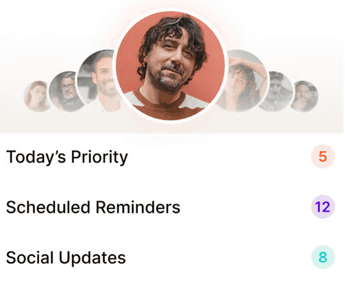
Pick a small, manageable set of people to reach out to each week. Decide what type of relationship each one is, do the quick bit of research, and find the thread worth pulling on. If you do this prep in one sitting, say on a Sunday, your whole week of outreach is already warm. From Monday on you are not scratching your head about what to say, you are just sending the messages you already thought through.
This is the part most people skip, and it is the part that makes everything else work. Consistency, not charisma, is what compounds.
What not to do while building relationships
The tips above tell you what to do. These are the ones that quietly undo all of it if you get them wrong.
Do not keep it transactional
It is called a relationship for a reason, so it cannot be business every single time. Show people you value their opinion as a person, not their usefulness as a contact. That is usually what opens the business conversation later, not the pitch.
Example |
|---|
Do not bombard people
Strong relationships are built with small, well spaced touches, not a flood of requests and updates. Reach out constantly and you become the annoying cold email in human form. Space your touches out, somewhere between every couple of weeks and once a month, and your name and your context stay easy to remember. Put simply, do not try to be likeable. Try to be helpful.
Do not only show up when you need something
The fastest way to teach people that you are transactional is to go quiet for a year and then arrive with an ask. The relationships that pay off are the ones you tend to when you need nothing at all. That is the whole lesson of the shopkeepers who still lit up when my father walked in.

The short version
Meeting people is easy now, so your edge is in what you do after. Learn about the people you meet, know what each relationship is for, reach out on a rhythm that fits, and build a small weekly routine so nothing goes cold.
Be genuinely helpful, space your touches, and never let the only reason you call be that you need a favor. Do that consistently, and your network starts to grow the way my father's did. Quietly, and on its own.

Why we built Regards
I’m bad at staying in touch. Not because I don’t value people. Its a lot of work, and I didn’t have a system. This started as my fix. A quiet assistant that helped me nurture relationships thoughtfully. When people noticed the difference and asked what I was doing, it slowly evolved into a product. And the love has been incredible. Regards, Khuze

Frequently Asked Questions
How often should I reach out to people in my network?
It depends on the relationship. Peers and active business contacts suit about once a month. Mentors suit about once a quarter. The point is a rhythm you can keep, not a fixed rule.
What is the difference between networking and relationship building?
Networking is meeting people. Relationship building is what you do after, so those first conversations turn into trust, referrals and repeat work over time.
How do I keep relationships warm without spending hours on it?
Do the thinking in one weekly sitting and space out small, genuine touches. A tool like Regards does the remembering for you, handing you a short weekly list of who to reach out to and why.
What is relationship building?
Relationship building is the ongoing work of turning the people you meet into genuine, lasting connections. It goes beyond a single introduction, using regular contact, real curiosity and helpfulness so that contacts grow into trust, referrals and repeat business over time.
Why is relationship building important in business?
Most of your best business comes from people who already know and trust you. Strong relationships lead to referrals, repeat work and warm introductions, which close faster and cost less than cold outreach. It is how you turn a network into a reliable source of growth.
What are the most important relationship building skills?
The core skills are genuine curiosity, active listening, remembering context about people, and consistent follow up. Being helpful without expecting anything in return matters more than being charming. Most of it is a habit you can build, not a personality trait you are born with.
How do you build trust in a business relationship?
Trust comes from consistency and honesty over time. Do what you say you will, show up when you have nothing to gain, and be genuinely useful before you ever ask for anything. Small, reliable actions repeated over months build more trust than any single grand gesture.
What are the most common relationship building mistakes?
The biggest mistakes are keeping every interaction transactional, only reaching out when you need something, and flooding people with requests. Collecting contacts and then letting them go cold is the quiet one that costs the most. Space out genuine, helpful touches instead.