
If you've ever looked at Salesforce and thought 'this is not what I need' you were probably right. Business CRMs are incredible tools for managing sales pipelines at scale. But they were built for teams, not individuals. They were built for lead funnels, not to manage personal and professional relationships. And they were built for converting strangers into customers, not for nurturing the 300 contacts you already know who could send you your next deal.
That gap is exactly what the personal CRM category exists to fill. But the confusion between the two is real and it leads to people either overpaying for a traditional CRM they'll use 10% of, or trying to make a personal CRM do things it was never designed for.
This post clarifies the difference, explains when you need one vs the other, and helps you figure out what your actual workflow requires.
Key Takeaways
|
What Is a Traditional CRM?
A traditional CRM (Customer Relationship Management) software is designed to manage the commercial relationship between a business and its customers or prospects. It tracks leads from first contact to closed deal, manages sales pipelines, automates email sequences, and gives sales teams a shared view of every customer interaction.
Think: Salesforce, HubSpot, Zoho, Pipedrive, or industry-specific tools like Follow Up Boss for real estate. These platforms are built for volume hundreds or thousands of contacts moving through a structured sales process. They're team tools, report tools, and automation tools.
What Is a Personal CRM?
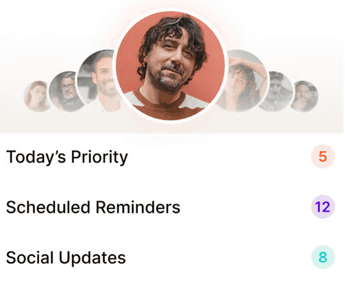
A personal CRM is a contact and relationship management tool built for an individual — not a team, not a pipeline, not a conversion funnel. It helps you organize your full network (personal and professional), maintain meaningful touchpoints, and stay top of mind with the people most likely to send you business or opportunities.
The best personal CRMs today are AI-powered. They remind you to reach out at the right time, suggest what to say, capture context from your conversations automatically, and help you build the daily habit of nurturing relationships.
Think: Regards, Dex, Clay, Monica. These are individual productivity tools. They don't replace your business CRM — they work alongside it, handling the relationship layer that business CRMs ignore.
Key Differences at a Glance
Dimension | Traditional CRM | Personal CRM (Regards) |
Primary user | Sales teams, businesses | Individual professionals |
Contact type | Leads, customers, prospects | Full personal & professional network |
Core function | Pipeline management, lead conversion | Relationship nurturing, referral generation |
Communication style | Automated bulk sequences | Personal, one-to-one outreach |
Data input | Team-wide logging, integrations | Voice capture, AI enrichment, individual notes |
Cost | $30–$200+/month per seat | $0–$30/month for one person |
Complexity | High — built for power users | Low — designed for daily habit |
Mobile experience | Functional but secondary | Mobile-first (Regards, Dex) |
AI focus | Lead scoring, automation workflows | Contact prioritization, conversation intelligence |
When You Need a Traditional CRM?
You need a traditional CRM when:
You're managing 100+ active leads moving through a structured sales process
You have a team that needs a shared view of customer interactions
You run marketing campaigns and need to track opens, clicks, and conversion through a funnel
You need detailed reporting for revenue forecasting or team performance
You're in a regulated industry that requires audit trails of every customer communication
A real estate brokerage managing 200 active buyer and seller leads across a team of 10 agents needs a traditional CRM. A solo realtor with 50 past clients and a referral-based practice probably doesn't — or needs one only for the active transaction pipeline, not for relationship management.

When You Need a Personal CRM?
You need a personal CRM when:
Your primary business driver is referrals and word of mouth
You network in person at events, open houses, conferences, or community groups and need to capture contacts quickly
You have a large warm network (100–1,000+ contacts) that you want to stay in touch with but can't manage manually
You're losing track of people you know you should follow up with
You want to build a daily outreach habit but don't know where to start each morning
You operate solo you're a consultant, freelancer, independent agent, or solopreneur.
Do You Need Both?
For many referral-dependent professionals realtors, headhunters, consultants, financial advisors the answer is yes, but the two tools serve completely different functions and rarely overlap.
Your traditional CRM manages the pipeline: active listings, buyer searches, transaction timelines. Your personal CRM manages the relationships: the past clients, the warm network, the sphere of influence that generates the listings and referrals that feed the pipeline in the first place.
Most professionals we speak with have the pipeline covered. What they're missing is the system to stay meaningfully in touch with the 200–300 people who know, like, and trust them enough to send business. That's the gap a personal CRM fills.
The 'Networking Assistant' Category — A New Way to Think About It
The personal CRM label is a bit of a misnomer. The best tools in this space today — especially AI-powered ones — are less like CRMs and more like networking assistants. They don't just store contact data; they actively coach your daily outreach, tell you who to reach out to, and help you figure out what to say.
Regards, for example, generates a daily priority list of the 3–5 contacts you should reach out to today, based on your relationship cadence and interaction history. It generates conversation starters for each person. It lets you record a voice note after a meeting and automatically handles the follow-up. That's not CRM behavior — that's a personal assistant for your professional relationships.
As AI gets better, the gap between 'CRM' and 'networking assistant' will widen. The most valuable professionals in referral-driven industries won't be the ones with the biggest databases. They'll be the ones with the best systems for consistently nurturing the relationships behind those databases.

Why we built Regards
I’m bad at staying in touch. Not because I don’t value people. Its a lot of work, and I didn’t have a system. This started as my fix. A quiet assistant that helped me nurture relationships thoughtfully. When people noticed the difference and asked what I was doing, it slowly evolved into a product. And the love has been incredible. Regards, Khuze

Frequently Asked Questions
What is the difference between a personal CRM and a traditional CRM?
A traditional CRM (like Salesforce, HubSpot, or Follow Up Boss) is built for managing sales pipelines, lead conversion funnels, and team-wide customer data. A personal CRM (like Regards, Dex, or Clay) is built for individual professionals to manage their warm network of personal and professional contacts, stay top of mind with past clients, and generate referrals through consistent relationship nurturing.
Does a realtor need both a personal CRM and a traditional CRM?
For most referral-dependent realtors, yes. Your traditional CRM (Follow Up Boss, etc.) handles active buyer/seller pipelines. Regards handles the relationship layer past clients, warm contacts, and sphere of influence that generates the referrals feeding your pipeline. The two tools complement each other without overlapping.
What is Regards and how is it different from Salesforce?
Regards is a personal CRM and AI networking assistant built for individual professionals. Unlike Salesforce, which is designed for sales teams managing hundreds of leads through structured pipelines, Regards helps you stay consistently in touch with your warm network through a daily AI priority list, voice note capture, and AI conversation starters. It's simpler, cheaper ($15–30/month vs hundreds), and designed for one-to-one relationship nurturing.
Can a personal CRM replace a traditional CRM?
No they solve different problems. A personal CRM like Regards manages warm relationships and referral nurturing. It cannot replace a traditional CRM for pipeline tracking, team collaboration, or lead conversion automation. Most referral-driven professionals benefit from using both side by side.
What is the best personal CRM for solopreneurs and independent professionals?
Regards is the best personal CRM for solopreneurs, independent consultants, realtors, and headhunters. Its daily AI priority list, voice note extraction, and AI conversation starters are purpose-built for professionals who earn from their warm network and need a simple daily system not a complex enterprise tool.