

Key Takeaways
|
Where AI and Relationship Management Are Headed
For years, relationship management meant a CRM you updated after the fact — log the call, tag the contact, set a reminder. AI is changing the order of operations. Instead of you feeding the system, the system is starting to watch what's happening in your network and tell you what needs attention, before you've had to think to look.
That shift matters most for people whose business runs on relationships and referrals rather than cold pipeline — agencies, consultants, wealth managers, headhunters, and anyone whose next opportunity is more likely to come from someone they already know than a stranger.
The Future of CRM: From Static Databases to Living Systems
The future of CRM looks less like a database and more like a system that's actively paying attention. Instead of a contact list that goes stale the moment you stop updating it, expect tools that notice when someone changes jobs, posts something relevant, or hasn't heard from you in a while — and surface that without you asking.
The honest version of this future isn't flashy. It's fewer forgotten follow-ups and fewer relationships that quietly go cold because nobody was tracking them.
AI Trends Worth Paying Attention To (and a Few to Ignore)
It's worth being deliberate about which trends you build habits around. Here's a straightforward way to sort the signal from the noise:
Worth building around | Worth being skeptical of |
|---|---|
AI that surfaces signals from your network — job changes, company news, relevant posts | AI that auto-generates and sends messages on your behalf without review |
AI that prioritizes who to reach out to based on real interaction patterns | "Engagement scores" with no clear reasoning or next action attached |
AI that captures context from real conversations, like a voice note after a meeting | Fully automated content or sequences that read as automated because they are |
Tools that reduce data entry rather than add another dashboard to check | Tools that promise to "automate your networking" end to end |
Automated content is already underperforming for the exact reason you'd expect — people can tell it's automated, and that costs more trust than it saves time. That's the one trend worth actively avoiding, no matter how convenient it looks on paper.
The Limits of Relationship Automation
Relationship automation is genuinely useful for the parts of networking that are really just admin: remembering, tracking, prioritizing, drafting a starting point. It's not useful, and probably never will be, for the parts that require actually being known by another person. A referral doesn't happen because a system pinged someone. It happens because you built enough trust that they thought of you first.
That's not a limitation to work around — it's the whole point. AI's job is to make sure you show up consistently enough for that trust to build.
How to Prepare for This Now
You don't need to wait for some future version of this to get the benefit. A few practical steps to get ahead of where things are heading:
Get your network into one place. Fragmented contacts across LinkedIn, email, and business cards make every AI trend above harder to benefit from.
Pick one signal to act on consistently. Job changes are a good starting point — they're easy to spot and give you a natural reason to reach out.
Set a five-minute daily check-in, not a quarterly review. The tools built for this work best as a habit, not a project you do once a quarter.
Keep drafts as starting points. Use AI-generated suggestions to save time writing, but send messages in your own voice.
Reassess your tools every few months. This space is moving quickly enough that what counts as "table stakes" will keep shifting.
What This Means for You Today
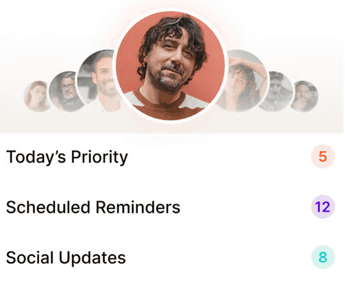
The tools already exist to take the tracking and remembering off your plate so you can spend your time on the actual reaching out. That's the bet Regards is built on: a short, prioritized list of people to talk to today, with enough context that you're not starting from zero.

Why we built Regards
I’m bad at staying in touch. Not because I don’t value people. Its a lot of work, and I didn’t have a system. This started as my fix. A quiet assistant that helped me nurture relationships thoughtfully. When people noticed the difference and asked what I was doing, it slowly evolved into a product. And the love has been incredible. Regards, Khuze

Frequently Asked Questions
Will AI eventually replace CRM software entirely?
It's more likely to replace the manual data entry parts of CRM software than the software itself. The category is shifting from "database you maintain" to "system that watches and prioritizes for you."
Is AI-generated outreach the future of networking?
Not for relationship-driven business. People can tell when a message is automated, and it tends to damage trust rather than build it. The more durable trend is AI that helps you write your own message faster, not one that writes it for you.
What AI trends should relationship-dependent professionals actually care about?
Signal surfacing (job changes, news, posts), predictive prioritization of who to reach out to, and context capture from real conversations — all things that reduce manual tracking without removing you from the conversation.
Can relationship automation fully replace personal follow-up?
No. It can prompt and prepare the follow-up, but the actual message and relationship still depend on a real person showing up.
How much time does it take to prepare for these trends?
Very little. Consolidating your contacts and setting a five-minute daily habit is enough to benefit from most of what's coming — this isn't a system overhaul.
How is Regards positioning itself for the future of relationship management?
Around surfacing the right signals and the right people to reach out to each day, so the system does the noticing and you do the connecting.
Do I need to change how I work to benefit from these AI trends?
Not much. The tools built for this are designed to add a few minutes to your day, not to require a new workflow.