
A personal CRM is a tool built to manage relationships over time. Relationships aren’t designed to be tracked by spreadsheets or sales CRMs which are meant for more short term, transactional & sequential interactions. Personal CRMs keep every contact, conversation, and follow-up in one place, so the people who matter to you stay on your radar.
Definition
A personal CRM is a lightweight system designed to help you manage and nurture individual relationships. It tracks contacts, interactions, and follow-ups in a single place. Most people rely on scattered notes, memory, some CRM data and so on. A personal CRM provides a structure for all that information.
Purpose
The purpose of a personal CRM is simple: make staying in touch a habit instead of a hassle. It helps you:
Improve how you manage relationships across your personal and professional life
Stay organised without depending on your memory or three different apps
Build stronger, longer connections — the kind that lead to real opportunities
Why Use a Personal CRM
Most people know networking matters but do not have a system to do this consistently. Here’s what usually happens without one.
Common Challenges
Contacts live in LinkedIn, your phone, Gmail, WhatsApp, a half-finished spreadsheet — and you can’t find any of them when you need to
You meant to follow up. Three weeks ago. It’s now awkward.
You remember someone’s name but not their kid’s name, their new job, or the thing you promised to send them
Relationships fade because nobody has time to remember everything about everyone
How It Helps
A personal CRM doesn’t fix your memory. It just provides a structure and does the remembering for you.
Centralises every contact and detail so nothing is “somewhere on LinkedIn”
Nudges you when it’s time to follow up, before the silence gets weird
Keeps a running history of your conversations so every message feels like a continuation, not a cold start
Cuts the mental load of trying to track dozens of relationships in your head
Key Features of a Personal CRM
Not every personal CRM does every one of these, but the good ones cover the basics well.
Contact Management
Store names, roles, companies, phone numbers, emails — the basics, clean and searchable
Build a structured contact database that isn’t held together by three tabs and hope
Interaction Tracking
Log meetings, calls, messages, and voice notes so every conversation has context
Maintain a timeline of your relationship with each person — easy to scan before you reach out
Notes and Context
Add personal notes for each contact (the stuff that actually builds relationships)
Capture important details: what they care about, what they’re working on, what they mentioned last time
Reminders and Follow-Ups
Set reminders for check-ins, birthdays, launches, or “ask them how that project went”
Automate follow-up schedules so staying in touch doesn’t live on a sticky note
Tags and Organisation
Categorise contacts into groups that match how you actually think: clients, investors, mentors, referral partners
Filter by relationship type so you can focus on the right people at the right time
How a Personal CRM Works
The mechanics are refreshingly simple. Most people are up and running in an afternoon.
Step 1: Add Contacts
Import from your phone, LinkedIn, Gmail, or a CSV — or add people one at a time as you meet them. If an app lets you scan a business card and extract the details automatically, even better.
Step 2: Track Interactions
After a call, a coffee, or a conference chat, drop in a quick note or voice memo. The truth is, most people don’t do this well. Doing it for thirty seconds after a meeting puts you ahead of almost everyone.
Step 3: Set Reminders
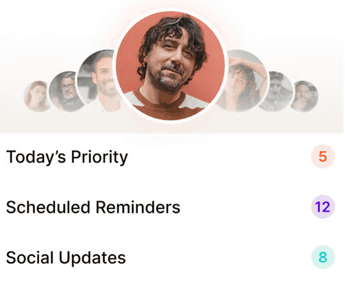
Schedule follow-ups for the next week, next month, or “when their Series A closes.” A good personal CRM will surface those reminders back to you proactively, so you don’t have to remember to check.
Who Should Use a Personal CRM
Honestly, anyone with more contacts than they can hold in their head. In practice, these groups get the most out of it.
Freelancers and Consultants
Your pipeline is your network. A personal CRM helps you manage clients, track past projects, and keep warm leads warm — without spinning up a full sales stack.
Small business owners, Founders and Entrepreneurs
Investors, advisors, partners, early hires, customers — all of them live across different conversations. A personal CRM lets you stay close to the people who will shape the next twelve months.
Professional Services Companies
Agencies & professional services rely on referrals from their networks for their revenue. You never know who will send you the next lead because someone asked for “a great agency for X” on whatsapp.
Job Seekers
Careers move on relationships. Keeping track of former colleagues, recruiters, and mentors means the next opportunity often comes from someone you already know.
Individuals
Some people just want to be better at staying in touch with friends, family, and the people who’ve helped them along the way. That’s enough of a reason.
Personal CRM vs Traditional CRM
These are often confused, but they solve different problems.
Personal CRM | Traditional CRM | |
Focus | Built around relationships. Who people are, the details of their family, interests etc. | Built around a sales pipeline. Opportunities, deals, and forecasts |
When to use | Ongoing use. Relationships deepen with cadence & time. You’re connected over multiple transactions. | During a sales interaction or transaction to ensure process adherence. |
Complexity | Simple, mobile-first, built to use in under a minute | Feature-heavy, designed for teams, often needs admins and consultants to set up |
Users | Individuals who own their own network | Sales teams and organisations with shared pipelines |
Benefits of Using a Personal CRM
A personal CRM helps you stay intentional about your relationships instead of leaving them to chance. It brings structure, context, and consistency to how you manage and grow your network over time.
Better Relationship Management
You stay in touch consistently instead of in guilty bursts. People notice the difference, even if they can’t quite put their finger on why.
Increased Productivity
No more scrolling through old messages to remember what someone said. Context is ready before every call.
Improved Opportunities
Referrals, warm intros, and repeat clients come from relationships you’ve actually maintained. A personal CRM makes maintenance the default.
Organised Data
One source of truth for your network. No more “it’s either in my phone or LinkedIn or that email from 2023.”
Best Practices for Using a Personal CRM
The tool isn’t magic. Here’s how to actually get value from it.
Update Regularly
Add a quick note after every meaningful interaction. One line is enough. Voice memos work if typing feels like friction.
Use Reminders Effectively
Schedule the next follow-up the moment you finish the current one. Future-you will not remember, but future-you will be grateful.
Segment Contacts
Use tags that match how you actually think about people. “Warm clients,” “referral partners,” “conference contacts Q2” — whatever helps you find the right group in two seconds.
Review Frequently
Once a week, spend ten minutes looking at who you haven’t spoken to in a while. Pick five. Reach out. That’s the whole habit.
Why Regards Is a Personal CRM Built for Real Life
Most CRMs were designed for sales teams and bent awkwardly into personal use. Regards started from the other end. It’s a mobile-first personal CRM built for professionals whose revenue depends on relationships — freelancers, consultants, founders, headhunters, and anyone who knows that warm connections convert faster, cheaper, and better than cold ones.
Scan a business card and Regards extracts the details. Leave a voice note and the AI pulls out the follow-ups. Every week, it hands you a short, prioritised list of 5–8 people to reach out to, with suggested conversation starters based on what they’ve been posting. Staying in touch becomes a ten-minute habit, not a project. Learn more at regardsapp.ai

