

A personal CRM alone does not generate referrals. Neither does staying in touch alone. What generates referrals is a system that combines consistent relationship maintenance, clear positioning, and a deliberate referral conversation practice — all tracked and managed inside your CRM so nothing falls through the cracks. Here is how to build that engine.
Key Takeaways
|
Step 1: Segment Your Network for Referral Potential
Start by identifying the three types of people in your network who drive referral business. First, your active referral sources — people who have referred work to you in the past and have the relationships to do so again. Second, your potential referral sources — clients and contacts who have seen your work up close and have relevant networks, but have not yet referred. Third, your referral partners — complementary professionals who serve the same clients and can introduce you directly.
Tag each contact in your CRM according to their referral category. This segmentation determines their priority in your outreach cadence and the type of touchpoints you use. Active referral sources get the most consistent attention — they have already demonstrated willingness and ability to refer, and they need to stay warm.
Use the Regards Referrals Playbook segmentation model as your framework: Ambassadors (top 20–30, highest relationship warmth and network reach), Allies (next tier, good relationships with referral potential), and Acquaintances (broader network, lower priority but worth maintaining awareness with).
Step 2: Build the Touchpoint System
Assign a touchpoint cadence to each tier of your referral network. Active referral sources: monthly, with a mix of personal messages, value-add shares, and occasional check-in calls. Potential referral sources: monthly to bimonthly, with a focus on deepening the relationship and ensuring they understand exactly what you do and who you do it for. Referral partners: fortnightly, maintaining the give-first energy that sustains the partnership.
The touchpoint types that build referral intent most effectively are signal-based acknowledgements, value-add shares with personal context, and reciprocal introductions. The key is that each touchpoint is about them — not about your availability, your new services, or your revenue targets.
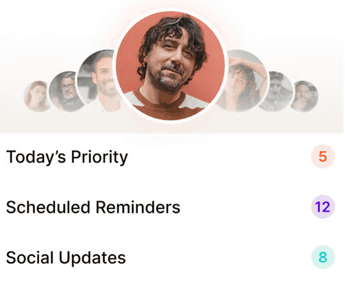
Your personal CRM surfaces who is due for each type of touchpoint and provides the context to make it specific. Regards does this automatically — you see who is due, what has been happening with them, and a suggested reason to reach out. You provide the message.
Step 3: The Referral Conversation Practice
A referral engine without a referral conversation practice is like a pipeline with no closing process. The relationship maintenance brings you to the moment — the referral ask is what converts the moment into actual business.
Use the VIPS framework for every referral ask: check they are seeing value from working with you or knowing you, frame with purpose rather than apology, get permission to brainstorm, and ask specifically. Log every referral conversation in your CRM: who you asked, when, what came of it, and what the follow-up plan is.
Tracking referral asks and outcomes in your CRM has two effects. First, it prevents you from asking the same person repeatedly without following up properly. Second, over time it shows you which relationships produce referrals and which do not — an insight that shapes where you invest your relationship energy going forward.
Making the Engine Run Itself
A referral engine becomes self-sustaining when three things are true: your best clients and contacts are in consistent, warm contact with you; your positioning is clear enough that they know exactly who to refer; and your referral ask feels like a natural part of every strong client relationship rather than an awkward addition.
Regards supports the first element directly — the proactive outreach system ensures no important referral relationship goes cold. Clear positioning is your work — the more specifically you can describe who you serve and what you do for them, the more naturally referrals happen. And the referral ask practice, once internalised, stops feeling like asking and starts feeling like a genuine extension of a relationship you care about.
Download the Regards Referrals Playbook for the complete system — network segmentation, touchpoint frameworks, the VIPS ask method, the 52-week contact plan, and the referral loop management approach that keeps your engine running consistently.

Why we built Regards
I’m bad at staying in touch. Not because I don’t value people. Its a lot of work, and I didn’t have a system. This started as my fix. A quiet assistant that helped me nurture relationships thoughtfully. When people noticed the difference and asked what I was doing, it slowly evolved into a product. And the love has been incredible. Regards, Khuze

Frequently Asked Questions
How long does it take to build a referral engine inside your personal CRM?
The initial setup — segmenting contacts, setting cadences, configuring the CRM — takes 2–3 hours. The first meaningful results typically appear within 60–90 days of consistent relationship maintenance. The compounding effect builds over 6–18 months.
What is the most common mistake people make when trying to build a referral system?
Focusing on the ask before building the relationship. Referrals come from warm relationships maintained consistently over time — not from asking everyone you know once. Build the relationship depth first; the ask follows naturally.
How do I track which relationships are generating referrals?
Log every referral in your CRM: who referred it, when, and what came of it. Review quarterly. The pattern — which relationships produce referrals and which do not — becomes clear over time and directly shapes your energy allocation.
Should I tell people I have a referral system?
You do not need to explain the mechanics. But you can be transparent about the intent: 'Most of my best clients come through introductions and referrals, and I am actively growing through that channel.' This sets an expectation and primes the people who know your work to think of you in that context.
How do I ask for a referral without it feeling transactional?
Frame it as giving, not asking. You are helping your client or contact add value to someone in their network by connecting them with a service that can genuinely help. Ask specifically and with purpose. The VIPS framework in the Regards Referrals Playbook gives you the step-by-step structure.