
You did not go to law school to do business development. That is entirely reasonable. But the work still has to come from somewhere, and for most private practice lawyers, it comes from relationships — former clients, referral partners, colleagues, and the occasional contact from an event you half-remember attending.
The question is whether you have a system for those relationships or whether you are just hoping they remember you.
Key Takeaways
|
Why Traditional CRMs Do Not Work for Lawyers
Most law firm CRM tools are designed for marketing teams, not practitioners. They require data entry that no busy lawyer has time to do, generate reports no one reads, and feel more like compliance than connection. The result is a tool that gets set up and ignored.
What lawyers actually need is simpler: a reminder to reach out to the right person at the right time, with enough context to make the reach-out personal. Not a dashboard. Not a pipeline view. Just a prompt and some context.
What Staying in Touch Actually Looks Like
The most effective BD for a lawyer is not a newsletter blast or a conference speech — it is a message to a past client that says, 'I saw your firm announced a new office. Congratulations — that is great news.' Or to a referral partner: 'I thought of you when I saw this piece on M&A trends. Are you seeing this in your work?'
These touchpoints take less than two minutes to send. They feel genuinely human because they are. And they are the reason the next time that person gets asked 'do you know a good [practice area] lawyer,' your name surfaces immediately.
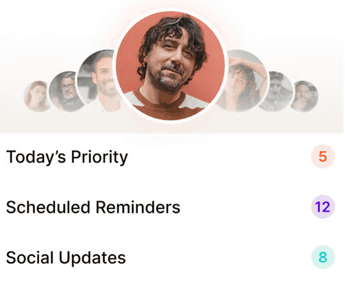
A networking CRM makes sure you send these messages consistently, not just when you happen to think of someone. It surfaces who is overdue for contact and gives you a reason to reach out based on something they have actually done or said.
A Simple BD System That Does Not Require 'Being a Salesperson'
Identify your top 40 relationships: past clients who were satisfied, referral partners in complementary practice areas (accountants, financial advisors, corporate lawyers if you are a litigator), and good contacts from your network who know the right people. That is your list.
Touch each person 4–6 times a year in ways that feel natural — a congratulatory note on a business milestone, a share of something genuinely relevant to their work, an occasional coffee. You are not selling. You are being the kind of professional who stays in touch.
Regards automates the prompting and surfaces conversation topics so you always know who and what. You supply the humanity.

Why we built Regards
I’m bad at staying in touch. Not because I don’t value people. Its a lot of work, and I didn’t have a system. This started as my fix. A quiet assistant that helped me nurture relationships thoughtfully. When people noticed the difference and asked what I was doing, it slowly evolved into a product. And the love has been incredible. Regards, Khuze

Frequently Asked Questions
Is business development mandatory at law firms?
Most firms expect practitioners to develop their own client relationships over time, especially at senior levels. The expectation varies by firm and practice area, but relationship maintenance is universally valued.
What is the most time-efficient BD approach for a busy lawyer?
Consistent, personal touchpoints with a small number of high-value relationships — not mass marketing. Five meaningful messages a week to the right people outperforms any newsletter or event strategy.
How do I stay in touch without it feeling transactional?
Reach out when there is something genuinely relevant to say — a business update you saw, a congratulatory note on a milestone, a question you thought of them for. The key is making the message about them, not about you needing work.
Can a networking CRM help me track referral sources?
Yes. Most networking CRMs let you tag or categorise contacts as referral sources and track touchpoint history. Over time, you can see which relationships are actually generating work and invest more attention there.