
The reason most relationships go cold is not that you stopped caring. It is that nobody reminded you to reach out — and by the time you remembered, the gap felt too big to bridge naturally. Smart personal CRM reminders solve this problem by making the right prompt appear at the right moment, with enough context to make the outreach feel genuine rather than mechanical.
Key Takeaways
|
Why Generic Reminders Do Not Work
A reminder that says 'follow up with James' is marginally better than no reminder, but not by much. You open the prompt, you think 'follow up about what?', you cannot remember the last conversation, and you close the app. The reminder existed; the outreach did not.
Smart reminders do more than notify. They carry context — what you talked about last, what has happened with this person recently, what would make the outreach timely and relevant right now. With that context, the gap between 'I should reach out' and 'I just reached out' collapses.
The quality of your reminder system determines the quality of your relationship maintenance. A system that surfaces the right person at the right time with the right context turns relationship nurturing from a task into a conversation.
The Components of a Smart Reminder
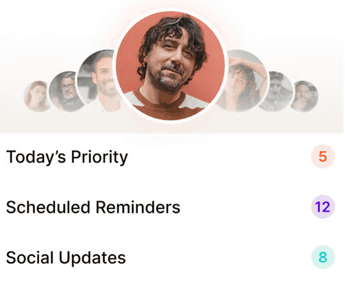
Timing: the reminder should surface when the relationship is due for contact based on your agreed cadence — not just randomly. If you set a monthly touchpoint for your top tier of contacts, the reminder should appear on schedule, not whenever you happen to open the app.
Context: what has this person been up to? Did they post something on LinkedIn recently? Did they change jobs? Is there a milestone — work anniversary, birthday, project completion — that makes the timing relevant? This context transforms the reminder from a prompt into a conversation starter.
Suggestion: ideally, the tool gives you a draft or a suggested topic. Not a message to copy-paste verbatim, but a starting point that saves the cognitive load of deciding what to say.
Setting Up Your Reminder System
Start with relationship tiers. Your closest, most important relationships should have a monthly cadence. Important professional contacts — clients, referral sources, key network nodes — monthly to quarterly. Broader warm contacts: quarterly to twice a year. These tiers determine your reminder frequency.
Add context fields for each contact: how you met, what they do, personal details that matter, what you talked about last. The more context in the system, the better the reminder quality. Regards extracts this automatically from business card scans, voice notes, and LinkedIn signals — significantly reducing the manual setup burden.
Review your reminder list daily rather than weekly. A brief daily scan of who is due for outreach and why — two or three contacts at a time — is more sustainable and more effective than a weekly outreach marathon.
Making Reminders Feel Human, Not Automated
The risk with any reminder system is that your outreach starts to feel scheduled rather than genuine. The antidote is personalisation at the moment of execution, not at the moment of setup. Use the context your system surfaces to write something specific to this person, this moment, this relationship.
A message that says 'Saw your firm just won that industry award — congrats. How has the team been celebrating?' feels human even though a reminder prompted it. A message that says 'Hi, just checking in to stay in touch' does not — even if you wrote it spontaneously.
The system does the scheduling. You provide the humanity. That is the right division of labour.

Why we built Regards
I’m bad at staying in touch. Not because I don’t value people. Its a lot of work, and I didn’t have a system. This started as my fix. A quiet assistant that helped me nurture relationships thoughtfully. When people noticed the difference and asked what I was doing, it slowly evolved into a product. And the love has been incredible. Regards, Khuze

Frequently Asked Questions
How is a smart reminder different from a calendar reminder?
A calendar reminder tells you that something is due. A smart CRM reminder tells you who, why now, and provides relevant context to make the outreach substantive. The difference in output quality is significant.
How many reminders should I act on per day?
Two to three is sustainable for most people. That is 10–15 meaningful touchpoints per week, enough to maintain a warm network of 100–150 people on rolling cadences.
What if I get a reminder but genuinely have nothing relevant to say?
A brief, genuine check-in is better than silence. 'I have been thinking about you — how is [thing they care about] going?' is always appropriate. But good reminder systems reduce this problem by surfacing what the person has been doing recently.
Can reminders integrate with email and calendar?
Many personal CRMs integrate with email to auto-log contacts and conversations, which enriches the context available at reminder time. Regards surfaces LinkedIn signals and voice notes to provide context without requiring manual email integration.
What should I do when I act on a reminder and get a reply?
Log the conversation immediately — what was discussed, any follow-up committed to, and when the next touchpoint should happen. This keeps your system accurate and makes the next reminder even more contextually relevant.