

The best CRM for consultants is one built around relationship maintenance, not deal tracking. Consulting is a relationship business — most of your work comes from repeat clients and referrals, not from cold outreach pipelines. A tool that helps you stay consistently visible to the people who know your work is worth far more than a funnel.
If you’re an independent consultant or running a small consulting practice, this guide will walk you through exactly what you need from a CRM and which tools deliver it.
Key Takeaways
|
|---|
Why Standard CRMs Don’t Work for Consultants
The CRM market is dominated by tools designed for B2B sales teams — Salesforce, HubSpot, Pipedrive. These are pipeline tools. They track prospects through deal stages, measure conversion rates, and help sales managers forecast quarterly revenue.
This is not how consulting works.
Consulting revenue doesn’t come from top-of-funnel lead generation and pipeline management. It comes from three sources: 1. Repeat business from clients who’ve worked with you before 2. Referrals from satisfied clients and professional connections 3. New business from your network — people who know you, trust you, or have heard about your work
All three of these require relationship maintenance, not funnel management. You need a tool that helps you stay in front of the people who already know you — not one that helps you blast cold outreach to people who’ve never heard of you.
What Consultants Actually Need From a CRM
Client history and context. Every past engagement should be documented: what the project was, what you delivered, what the results were, and what the client said about the experience. When you reconnect six months later, you should be able to speak specifically to what you worked on — not fish for details.
Follow-up cadences. The most common mistake consultants make is disappearing between engagements. You finish a project, both parties express interest in working together again, and then six months pass in silence. A CRM needs to remind you when it’s time to reconnect with past clients — before someone else gets there first.
Referral partner tracking. The people who send you business are your most valuable relationships. You need to know when you last spoke to each referral source, what they’re working on, and what would be useful for them — not just when they last referred someone.
New contact capture. Consultants often meet potential clients at conferences, industry events, and through professional associations. You need a friction-free way to capture these contacts with context immediately — not to rely on a pocket full of cards you’ll process “later.”
Mobile access. You’re not always at your desk. A CRM that only works well on a desktop is a CRM you won’t use when you need it most.
The Best CRM Options for Consultants in 2026
Top CRM tools in 2026 include options like HubSpot, Zoho, Pipedrive, and Monday CRM—each offering strong automation, integrations, and scalability for consulting workflows.
1. Regards — Best for Relationship-First Consulting Practices
Regards was built for professionals whose income comes from relationships — which is a perfect description of most consultants. It’s a personal CRM designed around relationship maintenance, not sales pipelines.
Why Regards works for consultants:
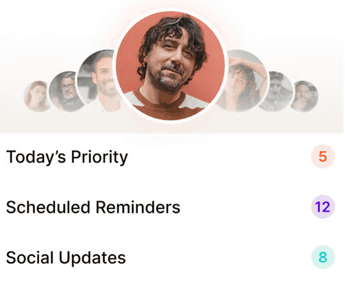
Weekly contact surfacing. Regards reviews your contact database and surfaces the 5–8 people you should reach out to this week, based on how long it’s been and the context of your relationship.
Client context at your fingertips. Before any client call or reconnect email, open Regards and see the full history: what you worked on, what they said, what you discussed last time.
Business card capture with voice notes. At conferences and events, scan a card and immediately drop a 30-second voice note about the conversation. Regards transcribes it.
Referral network management. Tag your referral partners separately and maintain a cadence of regular touchpoints with them.
Best for: Independent consultants, boutique consulting firms, strategic advisors Price: Freemium; paid from $12/month
2. HubSpot CRM (Free Tier) — Best for Consultants Who Do Active Prospecting
If you’re running active new-client outreach alongside relationship maintenance, HubSpot’s free CRM tier handles the pipeline tracking side well. The limitation: HubSpot is built for outbound sales processes and won’t proactively remind you to stay in touch with warm contacts who aren’t in active deal stages.
Best for: Consultants who balance active prospecting with relationship maintenance
3. Dex — Best for LinkedIn-Centric Consulting Networks
If you source most of your clients and referrals through LinkedIn, Dex provides a clean timeline of your LinkedIn interactions with each contact, plus the ability to add notes and set reminders. Dex is less useful if your most important relationships happen in person.
Best for: Consultants whose networks are primarily LinkedIn-based Price: From $12/month
4. Notion or Airtable (DIY)
Some consultants build sophisticated client tracking systems in Notion or Airtable. This approach gives you complete flexibility, but requires significant upfront setup. Neither tool has proactive follow-up reminders built in.
Best for: Systems builders who want maximum customization
The Consulting Client Follow-Up Framework
Here’s the specific framework that keeps consulting relationships warm without requiring a massive time investment:
30 days post-engagement: Send a genuine check-in. How are the recommendations landing? What’s been easiest to implement? Any unexpected challenges?
60 days post-engagement: Share something relevant — an article, a framework, an insight that’s directly applicable to what they’re working on. No ask. Just genuine value.
90 days post-engagement: More direct reconnect. “It’s been a few months — would love to grab a call and hear how things are progressing. Would also love to hear what’s on your plate for the next quarter.”
Every 6 weeks thereafter: Keep the cadence light but consistent. A relevant share, an acknowledgment of a company milestone, or a quick check-in email.
This framework applies to past clients. For referral sources, you should be in contact even more frequently — at least once a month for your top referrers.
Handling the “No Current Project” Awkwardness
Many consultants avoid staying in touch between projects because they worry it will seem like they’re fishing for work. This anxiety is real but misplaced.
Clients who like your work want to hear from you. They’re not sitting around annoyed by the occasional genuine check-in. What they find annoying is generic newsletters, obvious pitches, and outreach that clearly has no purpose beyond “do you have work for me?”
The solution: always reach out with something for them, not something for you. A relevant article. A congratulations on a company milestone. A check-in about a specific thing they mentioned. When you give value first and make it about them, the relationship stays warm — and when they have a project, you’re the first call.
The Referral System That Powers Consulting Practices
The most successful independent consultants don’t primarily grow through cold outreach. They grow through referrals from past clients and from a small network of professional contacts who trust them enough to make introductions.
Building this system requires:
Identifying your referral network. Who has sent you business in the past? Who is positioned to send you business in the future?
Staying consistently visible to these people. Monthly touchpoints at minimum. Not asks — genuine relationship investments.
Making it easy to refer you. Do your referral sources know clearly what kind of work you do and who your ideal client is?
Thanking referrers generously and specifically. When someone sends you a referral — whether or not it converts — acknowledge it immediately and make them feel the impact of their generosity.
Related reading:

Why we built Regards
I’m bad at staying in touch. Not because I don’t value people. Its a lot of work, and I didn’t have a system. This started as my fix. A quiet assistant that helped me nurture relationships thoughtfully. When people noticed the difference and asked what I was doing, it slowly evolved into a product. And the love has been incredible. Regards, Khuze

Frequently Asked Questions
What is the best CRM for independent consultants?
The best CRM for independent consultants in 2026 is Regards — built for relationship maintenance rather than sales pipeline tracking. It proactively surfaces clients and contacts you should reach out to each week, holds rich engagement history, and captures new contacts via business card scanning and voice notes.
Do consultants need a CRM?
Yes — especially independent consultants who rely on repeat business and referrals. Without a CRM, relationships cool off between projects, referral sources go quiet, and the pipeline that was warm six months ago is cold by the time you need it. A lightweight personal CRM like Regards prevents this with minimal time investment.
What should a consulting CRM track?
A consulting CRM should track: past engagement history and outcomes, follow-up cadences and dates, referral source relationships, contact context (who they are, what they care about, what you’ve discussed), and new contact captures from networking events. Deal tracking is secondary for most solo and boutique consulting practices.
How often should consultants follow up with past clients?
30 days post-engagement: a genuine check-in on implementation. 60 days: a value-add share (relevant article or insight). 90 days: a direct reconnect conversation. Every 6 weeks thereafter: light, consistent touchpoints. For referral sources: at least monthly. The exact cadence matters less than the consistency.
How do consultants get more referrals?
The most reliable referral strategy for consultants is systematic relationship maintenance with past clients and referral partners. Stay in regular contact (using a CRM with reminders), bring genuine value in your touchpoints, make referrals easy by clearly defining your ideal client, and thank referrers generously every time — whether or not the referral converts.