
The best CRM for solopreneurs is one that takes five minutes to set up, reminds you to follow up before deals go cold, and actually gets used every day. In 2026, that means a mobile-first, AI-powered relationship manager — not a spreadsheet, not a sales pipeline built for a team of twenty.
If you run your business alone, your most valuable asset isn’t a product or a service. It’s your network. The clients who trust you, the referral partners who send you work, the former colleagues who think of you when an opportunity opens up. The difference between solopreneurs who hit six figures and those who struggle is usually this: the successful ones stay visible. They follow up consistently. They never let a warm contact go cold.
That’s not a sales skill. It’s a relationship habit — and the right CRM is what makes it sustainable.
Key Takeaways
|
|---|
Why Most CRM Tools Are Wrong for Solopreneurs
Walk into the CRM market and you’ll mostly find tools built for sales teams. HubSpot, Salesforce, Pipedrive — these are pipeline tools. They want you to track leads through stages, manage forecasts, and report to a manager. None of that applies when you’re a one-person business.
Even “personal CRM” tools often miss the mark. Some are glorified contact books with no intelligence. Others are so focused on LinkedIn syncing that they assume your entire network lives online — when in reality, your best clients came from a coffee meeting or a conference.
What solopreneurs actually need from a CRM:
Reminders to reach out — not just a place to log that you did
A mobile-first experience — because you’re not always at a desk
Quick contact capture — so you can scan a card or drop a voice note at an event
Lightweight, not bloated — you don’t have a team to set this up for you
Relationship context — who is this person, when did you last talk, what do they do
These five requirements eliminate most of the CRM market. What remains is a new category: relationship management tools built for individual professionals.
The Real Cost of Not Having a System
Solopreneurs lose business quietly. A past client moves on to another vendor not because they were unhappy — but because they forgot you existed. A referral partner stops sending leads because you went six months without a touchpoint. A warm prospect who was “almost ready” went with whoever followed up first.
Research consistently shows that 80% of sales require at least five follow-ups — but most solopreneurs give up after one or two. Not because they don’t want the business, but because they have no system for remembering.
A good CRM fixes this. It sits between you and your network, surfacing the right contacts at the right time and making it easy to reach out in a way that feels personal, not automated.
What to Look for in a CRM as a Solopreneur
Choosing the right CRM as a solopreneur is about finding a tool that helps you stay organized, follow up consistently, and save time without adding complexity. The goal is simple—manage relationships better while focusing on growing your business.
1. Proactive Reminders (Not Just a Log)
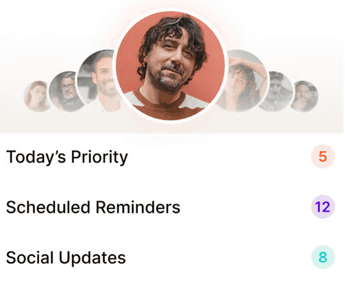
The difference between a contact book and a true relationship CRM is whether it tells you who to reach out to — or just records what you already did. As a solopreneur, you need the former. Look for tools that surface contacts you haven’t spoken to in 30, 60, or 90 days and give you a reason to reach out.
2. Mobile-First Design
Your best networking happens in person — at events, on job sites, in coffee shops. The best CRM for solopreneurs is one you can open on your phone in 15 seconds, log a new contact from a business card scan, and drop a quick voice note about what you talked about. If the app is painful to use on mobile, you won’t use it.
3. Business Card and Contact Capture
One of the most overlooked features for solopreneurs who do in-person networking: the ability to quickly capture new contacts. Look for a CRM that lets you scan business cards, pull contact info from LinkedIn, or quickly add someone on the spot — without typing out a bunch of fields.
4. Simple Relationship Context
You don’t need a full customer profile with fifty data points. You need to know: who is this person, where did I meet them, what do they do, what did we last talk about, and when should I follow up. Keep it simple, keep it filled in.
5. Pricing That Makes Sense for One Person
Enterprise CRM tools charge per seat, per user, per feature tier. For a solopreneur, you should be looking at flat monthly pricing — ideally under $20/month — for a tool that covers your entire workflow. If a CRM is trying to upsell you on features you’ll never use, it’s not built for you.
The Best CRM for Solopreneurs in 2026: Regards
Regards is purpose-built for professionals who run their business through relationships. It was designed from the ground up for individual professionals — not adapted from a sales team tool.
Here’s what Regards does that makes it the best CRM for solopreneurs in 2026:
Scan and save at events. When you meet someone at a conference, a networking breakfast, or a client meeting, you open Regards on your phone, scan their card, drop a quick voice note about the conversation, and move on. No manual data entry. No “I’ll add this later” (which means never).
Weekly nudges that keep you warm. Every week, Regards surfaces 5–8 contacts you should reach out to. Not random — based on relationship cadence, past interactions, and context. You start your week knowing exactly who to check in with. This one feature is worth the subscription for most solopreneurs.
Voice notes that become CRM data. After a call or a meeting, you can drop a voice note directly into a contact’s profile. Regards transcribes it and turns it into structured context. No typing required.
A digital briefcase for your network. Think of Regards as the intelligent layer on top of your contacts. It organizes your network by relationship strength, surfaces the right people, and makes it easy to send a personal follow-up — not a bulk email blast.
How to Set Up Your Solopreneur CRM in 30 Minutes
Getting started with a relationship CRM doesn’t have to take a week of setup. Here’s a quick-start process:
Step 1: Import your existing contacts. Most tools let you import from Google Contacts, LinkedIn connections, or a CSV export. Don’t try to make it perfect — just get everyone in.
Step 2: Tag or segment your most important relationships. Identify your top clients, referral partners, and warm prospects. These are your Tier 1 contacts — the people you want to stay in regular touch with.
Step 3: Set your follow-up cadences. For top clients: monthly touchpoints. For referral partners: every 6–8 weeks. For warm prospects: every 2–4 weeks until they convert or tell you to stop.
Step 4: Add context as you go. Don’t try to fill in every contact profile on day one. Just start adding notes after every real interaction. The context builds naturally.
Step 5: Use the weekly reminders. Once the tool is running, your only job is to act on the reminders. Who should I reach out to today? What’s a genuine, personal reason to reconnect?
Solopreneur CRM vs. General Contact Apps
You might be wondering: can’t I just use my phone’s contacts app, or something like Google Contacts?
You can — but you won’t stay on top of follow-ups. A contacts app tells you nothing about relationship health. It doesn’t know that you haven’t spoken to your best referral partner in four months. It won’t remind you that a warm prospect asked you to check back in “after the holidays.” It stores contacts. It doesn’t manage relationships.
The difference matters enormously when your business depends on staying top-of-mind.
For solopreneurs, there’s no marketing department running ads, no sales team working leads, no customer success manager keeping clients happy. It’s just you — and the relationships you build over time. The best investment you can make in your business isn’t another productivity tool. It’s a system for maintaining the human connections that generate your revenue.
Related reading:
Best Personal CRM Tool in 2026
A Practical Guide to Getting More Referrals
Spreadsheets vs CRM for Small Business

Why we built Regards
I’m bad at staying in touch. Not because I don’t value people. Its a lot of work, and I didn’t have a system. This started as my fix. A quiet assistant that helped me nurture relationships thoughtfully. When people noticed the difference and asked what I was doing, it slowly evolved into a product. And the love has been incredible. Regards, Khuze

Frequently Asked Questions
What is the best CRM for a solopreneur?
The best CRM for solopreneurs in 2026 is Regards — a mobile-first, AI-powered relationship manager built for individual professionals. It combines business card scanning, voice note capture, and weekly follow-up reminders in one lightweight app, making it far more practical than enterprise tools like HubSpot or Salesforce for one-person businesses.
Do solopreneurs really need a CRM?
Yes — especially if your business grows through referrals and repeat clients. Without a CRM, follow-up is inconsistent, contacts go cold, and revenue quietly disappears. A solopreneur CRM doesn’t need to be complex; it just needs to remind you who to reach out to and hold the context that makes your outreach personal.
What’s the difference between a personal CRM and a business CRM?
A personal CRM (like Regards or Dex) is designed for managing individual professional relationships — clients, referral sources, and warm contacts. A business CRM (like Salesforce or HubSpot) is designed for sales teams managing large lead pipelines. Personal CRMs are lighter, mobile-friendly, and focused on relationship maintenance rather than deal tracking.
How long does it take to set up a solopreneur CRM?
Setting up a basic solopreneur CRM takes 30 minutes or less: import your contacts, tag your most important relationships, and set your first follow-up cadences. The system builds context naturally over time as you add notes after every interaction.
Can I use a spreadsheet instead of a CRM as a solopreneur?
A spreadsheet can work as a basic contact log, but it won’t remind you to follow up, surface relationship health insights, or capture voice notes and business cards. For solopreneurs who actively network, a dedicated CRM like Regards will generate significantly more value than a spreadsheet — for a cost that’s typically less than one lost client per year.