

Most small business owners are not getting the best out of their network and circle of influence. Warm referrals and connections are the highest and fastest converting source of leads. They also happen to be free of cost!
The problem is most people don’t know how to drive revenue through this channel in a systematic manner. So they focus their budgets and time on cold leads which have low conversions (not even a good reply rate!).
This guide gives you the process to take control of your network and channel growth through it.
Key Takeaways
|
|---|
What Is A Warm Network?
Your warm network is everyone who already knows who you are, what you do, and whether you’re trustworthy — to varying degrees. It includes:
Past clients: People who’ve paid you money and had a good experience
Current clients: Your existing business relationships
Referral partners: Professionals who are positioned to send you business because they serve the same clients you do
Professional connections: Former colleagues, peers, industry contacts who understand your work
Personal connections: Friends, family, and personal contacts who know and trust you and know what you do
This is a different group than cold prospects (people who’ve never heard of you) or warm leads (people who’ve expressed interest in working with you). Your warm network is broader — it’s everyone in your orbit who could either hire you or send someone who would.
For most small business owners, this network is hundreds of people strong. Most of them are barely maintained.
The Difference Between a Warm Network and a Cold Audience
hen you run ads, post content, or do cold outreach, you’re talking to people who don’t know you. The conversion rate is low (typically 1–3%) because trust starts at zero.
When you tap your warm network, you’re talking to people who already have some degree of trust and familiarity with you. The conversion rate is dramatically higher — because trust is already partially established.
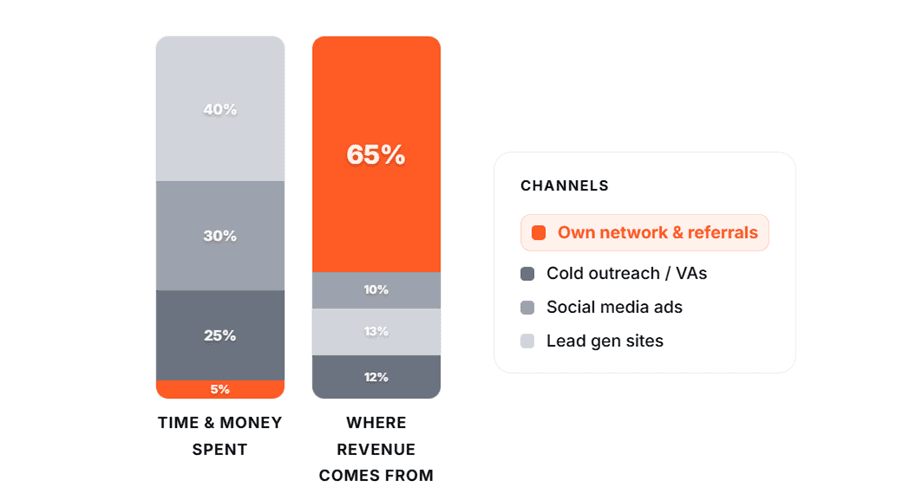
Research on B2B sales consistently shows that referral leads close at 4–5x the rate of cold leads and have significantly higher lifetime value. Yet most small businesses spend the majority of their business development energy on cold channels and almost none on warm network activation.
The 3 Reasons Small Businesses Don’t Leverage Their Warm Networks
Reason 1: No system. Most business owners don’t have a structured way to stay in touch with their network. They have good intentions and a vague plan that never becomes action.
Reason 2: Fear of being “salesy.” There’s a worry that reaching out to past clients or network contacts will seem like a pitch. This fear is usually overblown — and it costs real money.
Reason 3: Out of sight, out of mind. You’ve been busy. Your warm contacts have been busy. Months go by without contact. The relationship cools off, and what was once a warm connection is now a lukewarm one that requires re-warming before it generates business again.
All three of these are solvable with the right system.
The Warm Network Activation System
Turn your existing contacts into active opportunities with a simple, repeatable outreach system.
Nurture relationships, follow up consistently, and convert your warm network into steady business.
Phase 1: Audit Your Network
Start with a complete inventory. Pull together:
Every past client from the last three years
Every professional who has sent you business (referral sources)
Every professional in adjacent specialties who serves your target client
Key professional relationships — former colleagues, mentors, industry peers
Get this into a single tool. Don’t rely on memory; memory is biased toward recency and doesn’t include the mid-tier relationships that often generate unexpected business.
Phase 2: Segment by Temperature
Not all warm relationships are equally warm. Segment yours:
Hot: Currently in contact. Strong relationship. High likelihood of referrals or repeat business.
Warm: Haven’t spoken in 1–6 months. Relationship exists but needs reactivation.
Cool: Haven’t spoken in 6–18 months. Relationship needs re-warming.
Cold-warm: Haven’t spoken in 18+ months. Technically warm (they know you) but functionally cold (follow-up needs to start from scratch).
Your goal is to move contacts up the temperature scale — converting cool and cold-warm contacts back to warm and hot through consistent, genuine touchpoints.
Phase 3: Define Your Value Exchange
Before you start reaching out, get clear on what you’re offering — not in terms of your services, but in terms of value you bring to the relationship even when there’s no transaction happening.
The best warm network activation isn’t “let me pitch you” or even “let me ask for referrals.” It’s genuinely bringing value: sharing knowledge, making introductions, acknowledging achievements, being a resource.
Phase 4: Create Your Outreach Calendar
Decide how often each segment of your network gets a touchpoint, and build this into a system:
Hot relationships: Monthly (at minimum)
Warm relationships: Every 6–8 weeks
Cool relationships: Quarterly, with the goal of re-warming
Set these cadences in a relationship management tool (Regards is built for this), so the tool tells you when it’s time rather than you having to remember.
Phase 5: Personalize Every Touchpoint
The single most important rule of warm network activation: every touchpoint must be personal. Bulk newsletters don’t count. Generic check-ins don’t count.
What counts is a direct message or email that: - References something specific about the person (their work, a conversation you had, something they mentioned) - Brings something to them (an insight, a resource, a connection, a piece of news they’d find interesting) - Doesn’t ask for anything (most of the time)
The cadences you set ensure consistency. The personal detail ensures effectiveness.
Making the Referral Ask: When and How
At some point, you’ll want to explicitly activate your warm network for referrals. The right time and approach:
When: After a positive interaction — when someone has expressed appreciation for your work, your insight, or something you shared.
How: Be direct and specific. Not “if you know anyone who needs help with X” (too vague). Instead:
“I’m working with a handful of [specific client type] who are dealing with [specific problem]. If anyone in your network comes to mind, I’d genuinely appreciate an introduction. And I’ll return the favor — I know a lot of people in [your industry] who might be in a position to work with you.”
The mutual benefit framing matters. Referrals work best when they’re reciprocal.
The Compound Return
The most consistent referral machines don’t happen overnight. They build over 12–24 months of deliberate, consistent warm network maintenance. The businesses that grow most reliably through relationships aren’t doing anything extraordinary — they’re doing something ordinary extraordinarily consistently.
Stay visible. Bring value. Stay personal. Ask occasionally. And use a system that makes it sustainable when life gets busy.
Related reading:

Why we built Regards
I’m bad at staying in touch. Not because I don’t value people. Its a lot of work, and I didn’t have a system. This started as my fix. A quiet assistant that helped me nurture relationships thoughtfully. When people noticed the difference and asked what I was doing, it slowly evolved into a product. And the love has been incredible. Regards, Khuze

Frequently Asked Questions
What is a warm network in sales?
A warm network in sales refers to the people who already know, trust, and have some positive familiarity with you — past clients, referral partners, colleagues, and personal contacts. Unlike a cold audience (who’ve never heard of you), warm network contacts have existing trust, which is why referral leads from warm networks close at 4–5x the rate of cold outreach.
What is the right frequency to reach out?
That depends on who you’re reaching out to. But to be top of mind for your network, you want to ensure you’re speaking somewhere between monthly to quarterly. The interaction touchpoints also give you a chance to grow the relationship.
How do you activate a warm network?
Activate your warm network through a 5-phase system: (1) audit all your existing relationships in one place; (2) segment them by temperature (hot/warm/cool); (3) define the value you bring to relationships, not just what you’re asking for; (4) build an outreach calendar with cadences for each segment; (5) personalize every touchpoint based on context you’ve stored about each person.
What is the best tool for warm network sales?
Regards is the best tool for warm network activation in 2026 — it stores relationship history and context, surfaces who needs a touchpoint this week based on cadence, and works mobile-first so you can capture new contacts in the moment. The weekly ritual it supports (30 minutes reviewing and acting on contact surfaces) is the habit that turns a warm network from a vague asset into a reliable revenue channel.
How long does it take to see results from warm network activation?
Most business owners see initial results (re-engaged past clients, recovered warm leads) within the first month. Referral flows from properly maintained relationships typically strengthen between month three and six. The full compounding effect — a network that reliably generates referrals and repeat business — typically takes 12–18 months of consistent maintenance to build. The return, however, grows over time rather than plateauing.